We first confirm the scenario, usage and delivery requirements, then arrange testing or integration. There is no instant self-serve signup.
Model access. Inference. Applications.
Chinese AI.
Built into your business.
Tokenda provides project-based access to Chinese AI models for businesses in Southeast Asia, the Middle East and Latin America. Evaluate models such as DeepSeek, GLM and Kimi through an OpenAI-compatible API, with usage-based pricing and no required minimum.
No required minimum spend. Trial credits for eligible projects.
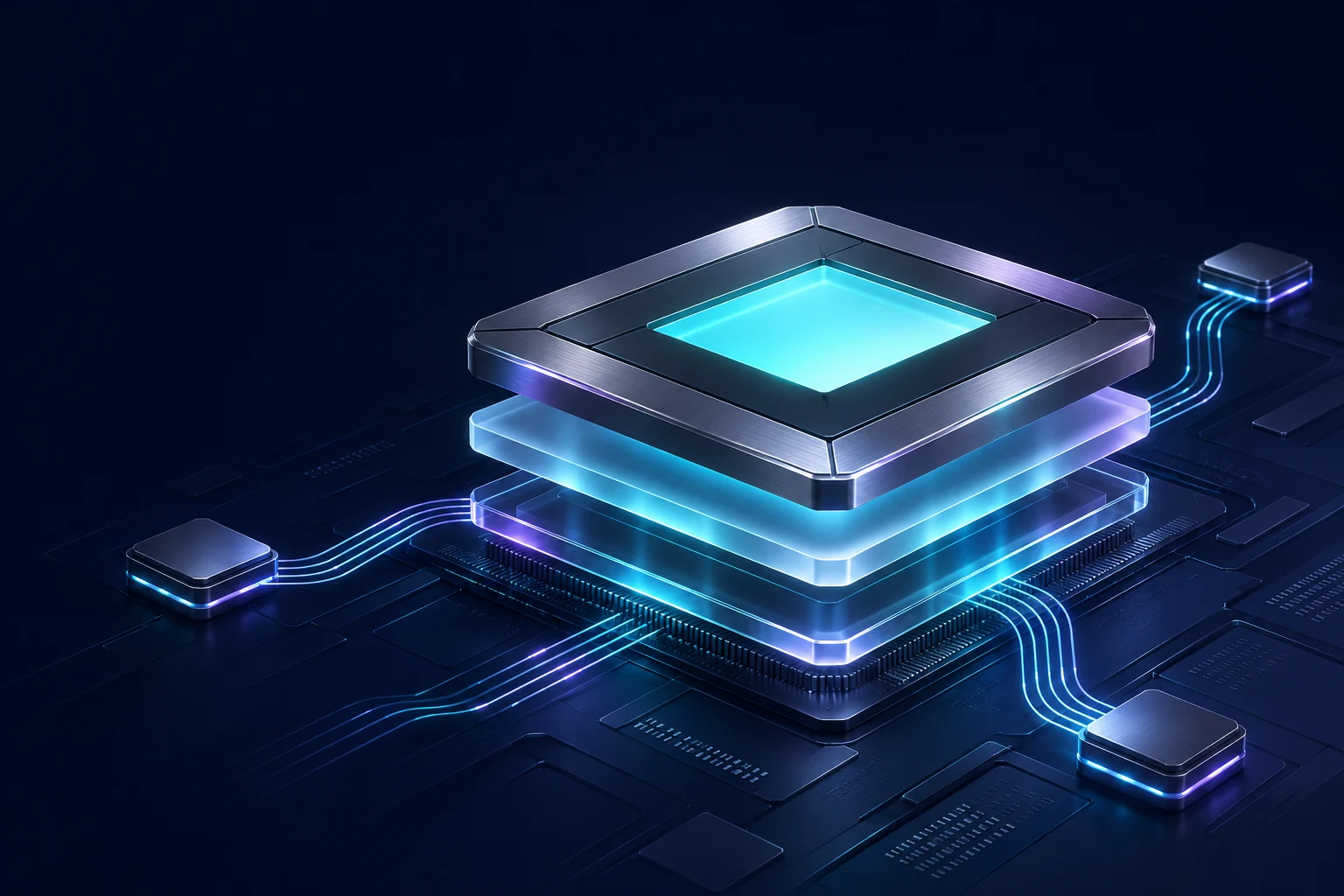
TokendaThe inference layer
ModelsDeepSeek · GLM · Kimi
One integrationTokenda API
Your businessApps & workflows
Concept architecture · Scope confirmed per project
A unified, OpenAI-compatible API makes it easier to evaluate and migrate within your current application.
You pay for what you use, with no required minimum.
We assess quality and cost against your examples, language needs and current bill, rather than a single percentage.
Models to evaluate for your workload
DeepSeekGLMKimi✳OpenAI-compatible API
Model versions and available capabilities are confirmed per project. Names identify models, not partnerships.From model to real-world capability.
Explore how the integration works, where the compute fits, and what your team can create.
A practical place to startDiscuss API access
One integration. More models to evaluate.
For teams that want to introduce Chinese models into an existing product, we provide unified, OpenAI-compatible API access. Discussions typically cover model selection, adapting your current integration, and a usage-based cost structure. You pay for what you use, with no required minimum.
- DeepSeek, GLM and Kimi text and question-answering use cases
- Migration assessment for your current models and workflows
- Pay for actual usage, with no required minimum spend
Supported models, versions and API capabilities are confirmed in your service scope.
Explore scope & requirements
This is a good starting point for teams that already have an application, already call a model, or want to complete an evaluation through an API first. An OpenAI-compatible interface is meant to reduce adaptation work in your current stack. It does not automatically mean the output will match your existing model, so we still recommend a side-by-side review with your real tasks.
- The models, interfaces and main task types you use today
- Whether models such as DeepSeek, GLM and Kimi are a fit for text generation and question-answering work
- The features, language performance and quality standards that must be checked if you migrate an existing application
- How usage-based pricing would be compared with your current bill
- The scope of a test, whether trial credits may apply, and how expansion would be handled later
PythonOpenAI-compatible
# Credentials and model ID supplied on activation
client = OpenAI(
  base_url=YOUR_BASE_URL,
  api_key=YOUR_API_KEY
)

response = client.chat.completions.create(
  model="DeepSeek_MODEL_ID",
  messages=[{"role": "user",
    "content": "Write a product description."}]
)✳Example outputDeepSeek
Light enough for your daily commute. A reusable bottle, designed for wherever the day takes you.
Resources around your workloadDiscuss dedicated resources
Capacity planned for your requirements.
For teams with sustained workloads, peak-demand requirements or specific deployment needs, we can assess dedicated inference resources. Model choice, capacity, location and network conditions will shape the proposed setup. If you need constraints on where data is processed, how long it is retained, or whether it can leave a given region, tell us at the outset so we can assess what is feasible for your project.
- Shared API versus dedicated resource assessment
- Capacity planning, peak concurrency and deployment options
- Data handling and support requirements reviewed before delivery
Resource availability and service commitments are agreed per project.
Explore scope & requirements
This conversation usually begins when a shared API no longer covers your concurrency, isolation or deployment requirements well enough. We will not lock in a particular facility, zone or network path in a first conversation. Those choices depend on your usage, target markets and data requirements, and both resource availability and service commitments are confirmed per project.
- Typical usage, expected peak concurrency and an acceptable way to plan capacity
- When a shared API is enough, and when dedicated resources are worth discussing
- Location, network conditions and the access path you want to prioritise for your markets
- Constraints on processing location, retention, logs and cross-border transfer
- The operational support scope after launch, and how issues would be escalated
Your applicationRequests from your existing product
TokendaInference endpoint
Dedicated resource boundary
GPU
GPU
GPU
Model runtime & inference service
ModelPeak demandLocation
Architecture concept. GPU type, quantity, location and support are defined in the project plan.
From a task to a working approachDiscuss an application
Start with a real workflow.
For companies that want to apply models inside a real business workflow, we start with one clearly defined scenario. First agree the inputs, expected outputs and acceptance criteria, then discuss the model, system integration and a potential pilot.
- Multilingual commerce and customer-support workflows
- Education, language learning and content assistance
- Short-form video ideation, scripting and generation
Video models such as Seedance are assessed separately, including interfaces and billing.
Explore scope & requirements
This is a good path when you already know which part of the work should improve, but have not yet settled the model, the process or the acceptance standard. We start with one concrete workflow rather than a broad “automate everything” plan. Video models such as Seedance are assessed separately from text models, including interface and billing arrangements.
- The specific step you want to improve, and how that work is done today
- Input materials, expected outputs and the quality bar your team can accept
- Whether a pilot should start in multilingual commerce content, customer-support assistance, education and language learning, or short-form video production
- What system integration is required, and where human review should sit
- The scope and timing of a pilot, and how you will decide whether to expand
1
Business inputProduct data / knowledge / creative brief
2
Model processingText / answers / video generation
3
System integrationBring the output into your workflow
4
Human reviewCheck quality and acceptance criteria
CopyAnswersPracticeVideo
Video interfaces and billing, including Seedance, are scoped separately.
A useful evaluation starts with your work.
Can inference cost come down?
As usage grows, model costs can affect your product margins. Compared with typical international flagship model APIs, Chinese models can reduce inference cost substantially. How much you save depends on the task, quality requirements and volume. Share your current models, usage and billing details, and we will estimate based on your actual workload rather than a single percentage.
How to prepare
If you do not yet have a complete bill, tell us the main task types, the approximate size of inputs and outputs, and the models you use today. We will tell you what else is needed to produce a comparison that is useful for a decision.
Will the model handle the task?
Product descriptions, support conversations, learning content and video production have different requirements. Even within the same category, language, tone, source limits and response needs can change the result. We prefer to start with your real examples and review output quality, language performance and response needs, not just model names.
How to prepare
A useful test usually needs a representative set of inputs, the quality bar your team already accepts, and the output you use today as a baseline. That keeps the discussion on standards you can accept, rather than on public leaderboards alone.
What will it take to launch?
Integration, peak demand, data handling and ongoing support all affect the path to launch. Clarifying these conditions early helps us judge whether a proposed approach is worth pursuing. Eligible projects may request trial credits, so you can test with real examples before expanding use.
How to prepare
If the work is still in an internal review stage, we can also discuss the materials your team may need: how models will be compared, how cost will be estimated, which data and deployment questions must be confirmed, and a suggested next step you can take back inside the company.
See what AI can do in your workflow.
From a product brief to a usable draft. Explore illustrative inputs, outputs and review steps.
Create for the markets you serve.
Discuss product descriptions, campaign copy and content drafts for your target markets. Start with one product category, language or publishing workflow, and define brand tone, review rules and release requirements.
- Product information
- Localized drafts
- Human review
We will usually ask for a few published examples you already consider strong, the product information that needs to be rewritten or generated, and any wording that must not appear. That keeps the evaluation close to a real release, rather than a disconnected demo paragraph.
Illustrative content, not a customer case or live model output. Scope is agreed per project.
Discuss this use caseProduct inputAn everyday travel bottle
480 ml · Reusable · Lightweight
English
Made to move with you.
A lightweight 480 ml bottle for your commute, your next trip, and everything in between.
Português
Pronta para acompanhar você.
Uma garrafa leve de 480 ml para o caminho ao trabalho, a próxima viagem e todos os momentos entre eles.
Next: review facts, brand voice and language quality
Help your team answer with context.
Explore how AI can support common questions, knowledge-base answers and human support teams. The key issues are trusted sources, answer boundaries, escalation rules and quality criteria.
- Trusted knowledge
- Suggested answers
- Agent review
A useful starting set is often your most common questions, the way your knowledge base is organised today, and the errors you cannot accept. Together we can confirm which questions are suitable for assistance first, and which must remain with a person.
Illustrative content, not a customer case or live model output. Scope is agreed per project.
Discuss this use caseShipping policy · Example document§2 / Delivery: 3–5 business days
Customer
How long does delivery take?
✳ Suggested answer
Our standard delivery window is 3–5 business days. If your order is overdue, I can help you contact the support team.
Source: Shipping policy, §2Agent reviews → sends reply or escalates
Make practice fit the learner.
Discuss practice generation, conversational exercises and learning feedback. Target languages, content quality and the intended learners will determine what a pilot should test.
- Learning objective
- Practice & dialogue
- Quality review
If the product is designed for a particular age group or examination setting, tell us the content limits and review requirements. The model and the prompts should follow your teaching aims, not the other way around.
Illustrative content, not a customer case or live model output. Scope is agreed per project.
Discuss this use caseLearning objectivePractice everyday EnglishFocus: past tense in conversation
Learner
Yesterday I go to the park.
✳ Example feedback
Yesterday I went to the park.
Use “went”, the past tense of “go”, when talking about yesterday.Try another sentence
What did you do after that?
Build a more focused creative workflow.
Explore specific steps in ideation, scripting, storyboarding and video generation. Content rights, brand consistency, output specifications and human review should be included in the project scope.
- Creative brief
- Script & generation
- Editorial review
Video generation is assessed separately from text generation. If we discuss video models such as Seedance, we will confirm the interface, billing, output specifications and suitable tasks on their own terms, rather than mixing them into an unexplained text-model plan.
Illustrative content, not a customer case or live model output. Scope is agreed per project.
Discuss this use caseCreative briefA 15-second travel bottle concept
A morning commute. A lighter everyday routine.
00–05sSet the scene
05–10sShow the product
10–15sClose on the idea
▷15s
Storyboard illustration. Generated video is scoped separately.
Clear decisions.
From the first conversation.
Why Tokenda? Cost, quality, integration and delivery conditions, considered together.
Judgement against your bill and your work
Compared with typical international flagship model APIs, Chinese models can often reduce inference cost substantially. We will not replace your situation with a single percentage. A serious cost discussion should be built on your task types, input and output volumes, quality requirements and current billing details.
Read more
The advantage is practical: you can take the assessment back to your own team, instead of leaving with a claim that cannot be checked. How much you may save depends on the work itself. Whether a change is worthwhile can only be judged against the work you are already doing.
An enterprise delivery habit
The core team has more than 15 years in enterprise technology, including work with large accounts at companies such as Intel, Cisco and Dell. We understand that an enterprise purchase usually has to pass several gates: the technology has to be tested, the cost has to be explained, data and responsibility have to be written into terms, and someone has to remain accountable after launch.
Read more
We begin by clarifying the task, budget and delivery requirements, then decide how to test, integrate and launch. When written material is needed, we prepare a scope discussion, a cost basis and service terms that both sides can keep reviewing, rather than leaving the work only in a chat history.
Access, capacity and application on one path
You can begin with an API evaluation, discuss dedicated inference resources when usage, concurrency or deployment needs are already clear, or start from a business workflow when the operational question comes first. These three forms of work can start separately, but you should not have to explain the same project to three different vendors.
Read more
The value is fewer handoffs. Whether a model is fit for purpose, whether the cost holds, and what is still required for launch can become clearer in the same conversation.
Data and deployment can be discussed from day one
If your project involves customer information, business data or cross-border processing, those requirements should not be left until the end. Processing locations, data flows, log retention, upstream model services and contractual responsibilities will be reviewed as part of the proposed approach.
Read more
If you need data processing limited to a specific region, or do not want source data retained in the inference environment, tell us at the outset so we can assess a feasible deployment and data-handling arrangement. Architecture, data-handling practices and service terms will be set out in a written agreement. We will not describe an arrangement that has not been confirmed as if it were already a standard, generally available capability.
Built for three markets, not copied across from a single playbook
Companies in Southeast Asia, the Middle East and Latin America differ in language, content review, user expectations and the pace of internal buying. Tokenda focuses on these markets so that model performance, support arrangements and delivery conditions can be discussed with your target users in mind.
Read more
The website and first conversations are in English; Chinese is also available. Share your target countries, user languages and use case so we can confirm what should be tested and how we should communicate.
A starting point that fits cross-border work
You can use WhatsApp to raise one concrete question, or send a fuller project brief through the enquiry form. We aim to reply within one business day. Our working hours are 09:00–19:00 UTC+8. Eligible projects may request trial credits, so you can test before you expand.
Read more
For teams that need internal sign-off, the first contact does not have to wait for a perfect tender document. One concrete use case, the models you use today, and your expected usage or project stage are enough to begin.
Start small.
Make the evaluation count.
How we would approach three kinds of project. These are methods, not completed client stories.
Commerce content
Begin with published copy from one category as a baseline, define brand tone, prohibited wording and the specifications that must be kept, then evaluate suitable text models and calling methods.
What the pilot needs to establish
How the unit cost of this content work compares with the current approach at an acceptable quality bar; where human review should sit; and whether it is worth piloting in one category before extending to more languages.
Learning exercises
Confirm the learners, the target language, the types of content that must not be generated, and the standard that existing exercises already meet, then choose the examples that will be used for model evaluation.
What the pilot needs to establish
Whether generated content meets teaching review requirements, which steps must remain under human review, how the interface would enter the current product, and whether usage-based pricing still suits ongoing use.
Customer support
Gather the most common questions, the current knowledge sources and the escalation rules, then validate the work in an assistance role rather than replacing the support team outright.
What the pilot needs to establish
How the answer scope will be limited, how incorrect answers will be caught, how knowledge-base updates will stay in sync, and which capacity or deployment questions arise at peak demand.
Preparing for an internal review?
We can discuss how models will be compared, the basis for estimating cost, what integration needs to validate, data and deployment requirements, and a suitable pilot scope. Any written deliverables are agreed per project.
Know what happens next.
You do not need a finished specification. One concrete use case is enough to begin.
- 1
Start the conversation
Tell us what you want to achieve, your target markets, and where the project stands.
- 2
Review the requirements
Discuss models, integration, usage, data handling and a cost range that works for you.
- 3
Agree on a next step
Define the scope and timing of an evaluation, integration or pilot. Eligible projects can request trial credits.
Already have a use case in mind?
Share it in a few lines. We aim to send an initial reply within one business day.
A bridge between Chinese AI and your business.
Tokenda is a China-based cross-border AI services company. We focus on turning Chinese model capabilities into infrastructure that international businesses can evaluate, integrate and use in daily operations.
Southeast AsiaMiddle EastLatin America
15+ yearsof enterprise technology experience in our core team
The core team has more than 15 years in enterprise technology, including work with large accounts at companies such as Intel, Cisco and Dell. We understand the usual pace of enterprise buying: technical claims have to be tested, finance needs a comparison it can explain, legal and security teams need to see the boundaries, and business owners need to know the next step.
One counterpart, from model to launch.
We provide model API access, assessments of dedicated inference resources, and application collaboration around clearly defined business workflows, for companies in Southeast Asia, the Middle East and Latin America. Work is opened per project: we first confirm the task, usage and delivery requirements, then arrange testing or integration.
Our starting point is practical: which tasks in your business are worth evaluating with Chinese models, how should they be tested, and what would implementation require? Tokenda is not a storefront waiting for a self-serve order. We act as your counterpart on the China AI side, so model choice, integration, cost and launch conditions can be discussed in one conversation.
How we approach the work
For an enterprise customer, a reliable engagement usually has a clear task, a cost discussion that can be checked against the current bill, a plain integration and migration path, early attention to data and deployment requirements, and a counterpart who stays with the project. Tokenda organises the conversation around that standard.
The task comes before the model. We first confirm what you need to accomplish and how you will judge success, then discuss which models and calling methods are worth evaluating.
Comparison uses your bill and your examples. Cost and quality are read in your business context. A single percentage is not a substitute for that review.
Launch conditions are raised early. Integration, concurrency, data, support scope and contract terms are not left until the end.
Commitments are set per project. Supported models, versions, deployment arrangements and responsibilities are confirmed in the agreed service list and written terms.
Built around your market.
Tokenda’s target markets are Southeast Asia, the Middle East and Latin America. We focus on these regions because companies there are putting AI into products and operations, and because they often have very specific requirements around inference cost, local-language performance and a workable commercial arrangement.
If your users are in these regions, or your team is preparing content, support or learning products for them, we welcome the conversation. Share the countries you serve, the languages your users speak and the use case, so we can confirm what should be tested and how support would be arranged.
Working across time zones
For international work, English is the default language; Chinese is also available. Our working hours are 09:00–19:00 UTC+8. If a live call is inconvenient because of the time difference, leave your country and a convenient time on WhatsApp or in the enquiry form, and we will arrange a suitable way to talk.
Bring your data requirements into the conversation.
If your project involves customer information, business data or cross-border processing, include these requirements in your enquiry. Processing locations, data flows, log retention, upstream model services and contractual responsibilities will be reviewed as part of the proposed approach.
If you need data processing limited to a specific region, or do not want source data retained in the inference environment, tell us so we can assess a feasible deployment and data-handling arrangement. Architecture, data-handling practices and service terms will be set out in a written agreement.
Information to bring to the discussion
To make the first conversation more effective, you can list the data types involved, whether end-user personal information is included, any required or preferred processing locations, how long logs should be kept, what must not leave a given region, and any security or legal requirements you already have. If that list is incomplete, contact us anyway; we will tell you what else would help.
A few things you might be wondering.
Can I sign up and start calling an API now
Access is opened per project. There is no instant self-serve signup. Contact us on WhatsApp or through the enquiry form with your use case, and we will confirm the potential scope, access conditions and timing. Eligible customers may request trial credits.
Should I start with API access or dedicated resources
Start with your current architecture, typical usage and peak demand. API access is usually the better way to test whether a model fits the work; dedicated resources require a closer discussion of capacity, deployment and operations. The right approach depends on the project. If you are unsure, begin with one concrete task; you do not need to choose a service type first.
How much could I save
Compared with typical international flagship model APIs, Chinese models can often reduce inference cost substantially. The actual difference depends on your current models, task requirements, input and output volumes, and the final service arrangement. We recommend comparing real examples and your current bill. Pricing and calculation assumptions will be confirmed in the project discussion.
Can I migrate an existing application
Yes, we welcome that conversation. Share the models, interfaces and key features you use today. An OpenAI-compatible API can reduce migration effort, but we still need to validate output quality, language performance and business workflows. Scope and timing will be confirmed after evaluation.
Which markets and languages are you targeting
Our target markets are Southeast Asia, the Middle East and Latin America. Share your target countries, user languages and use case so we can discuss testing, availability and support. The website and first conversations are in English; Chinese is also available.
What if I have sensitive data or specific deployment requirements
Describe the data types, processing-location requirements and internal approval conditions. Data flows, service providers and responsibilities need to be reviewed before we agree on an approach.
What is your relationship to the model providers
Tokenda provides project-based access to Chinese AI models and related collaboration. The models, versions and interface capabilities that can be used will be confirmed in the agreed service list. Please do not read model names on this site as an announced exclusive agency or an official endorsement. If you want to know whether a particular model can be evaluated, say so in your enquiry.
How are contracts, billing and support handled
Work proceeds per project. Scope, billing, data-handling requirements, support coverage and the allocation of responsibilities will be set out in a written agreement. Invoicing and settlement will be explained once the project is confirmed. We do not publish a single set of standard contract terms on the website as if they applied to every customer.
What should I prepare before contacting you
One concrete use case is enough to begin. If you have them, share your current models, target markets, expected usage and project timing. Early-stage projects are welcome too.
How quickly will you reply
We aim to reply within one business day. Our working hours are 09:00–19:00 UTC+8. If a phone call is inconvenient because of the time difference, leave your country and a convenient time on WhatsApp or in the form, and we will arrange a suitable way to talk.
Tokenda
Let’s talk about your next step.
Evaluating models, reviewing AI costs, or building something new? Start with one concrete question.
Chat on WhatsAppIn another time zone? Leave a convenient time for a call.
Tell us about your project
Four short fields to start. Add more detail if you have it.
Your enquiry has been received.
We aim to send an initial reply within one business day. You can also message us on WhatsApp with your reference.
Your reference:
Chat on WhatsApp